
For a museum or art gallery, a useful custom plush brief starts with the collection story, permission to adapt it, the intended user and the person who can approve the result. Agree those points before requesting a sample. Then specify the features the plush must preserve, the quantity for each design, its packaging and the date it needs to reach your receiving team.
A souvenir can offer visitors a tangible connection to an exhibition. Whether it sells well or supports an educational activity depends on your audience, product and programme; those outcomes cannot be promised from a design alone. This guide focuses on the procurement decisions that help museum shops, exhibition teams and gallery merchandise buyers assess a project before placing a bulk order.
Aokuma’s standard MOQ is 500 pieces per design. If your proposed range has several characters, begin with a quantity line for each rather than one combined total. You can send a project brief for review while clearly marking details that are still undecided.
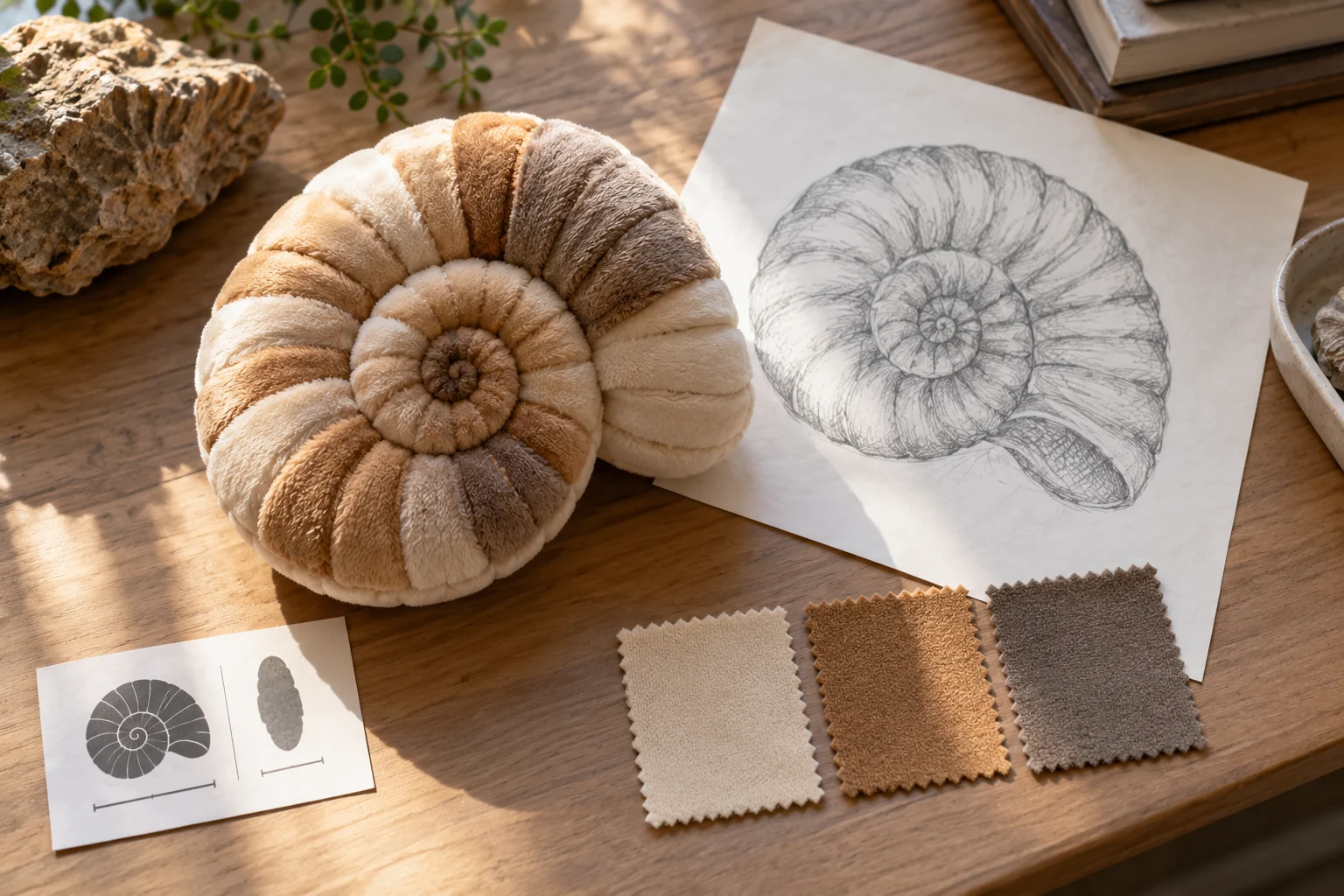
1. Choose one collection story and one primary use
“Something inspired by our museum” leaves the supplier to guess what matters. Identify the exhibition, object, species, artist-approved character or institution-owned mascot the product will represent. Explain the connection in a few sentences that the design team can understand without visiting the exhibition.
Next, choose the main use. A gift-shop toy, a gallery collectible and an object used repeatedly in facilitated learning sessions can require different decisions about size, handling, accessories, care and packaging. If the same design serves more than one purpose, list the differences rather than assuming one specification covers every use.
- Permanent collection souvenir: identify the features that should remain consistent for future orders.
- Temporary exhibition merchandise: give the opening and closing dates, planned selling period and approvals deadline.
- Education programme item: explain who handles it, how it is shared and how your team intends to clean or store it.
- Artist collaboration: identify the artist’s approval role and any required credits or restrictions.
Keep the commercial objective measurable on your side. For example, your team might track sales by exhibition and design, or record how educators use a handling object. Avoid putting unverified learning, wellbeing or visitor-retention claims on the product or its packaging.
2. Confirm the rights before turning a reference into merchandise
Record who supplied each reference image, who controls the design and who has authority to approve merchandise. Owning or displaying an object should not be treated as sufficient evidence that every proposed adaptation, photograph or logo use is permitted.
The U.S. Copyright Office explains that preparing derivative works is an exclusive right of a copyright owner. The appropriate permission analysis depends on the work, proposed use and relevant jurisdiction. Have your institution’s rights or legal team resolve uncertain cases before authorising production.
For procurement, a short rights checklist is useful:
- Which artwork, photographs, character features, names and marks may be used?
- Does the agreed scope cover a three-dimensional plush adaptation and its packaging?
- Which sales territories, channels, quantities or time periods apply?
- Who approves the sample, labels, credit line and promotional photography?
- What happens if the exhibition ends or the permission period expires before stock sells through?
These are questions for the responsible rights holder, not standard terms that Aokuma can assume. When using an online collection image, check its individual rights statement. The Library of Congress guidance similarly directs users to consider copyright status and obtain permission when their proposed use requires it.
3. Translate curatorial accuracy into visible sample checks
A plush interpretation changes shape, texture and detail. Give the manufacturer a ranked list of what must remain recognisable, what can be simplified and what needs a proposal before it changes. This is more actionable than asking for an “exact replica” without explaining the essential characteristics.
For a natural-history subject, your curator might prioritise the silhouette, limb arrangement and distinctive markings. For an artist-approved character, the expression and relationship between facial features may matter more than a minor decorative detail. Treat these as project-specific decisions, not universal design rules.
Prepare front, side and back references where available. Identify the intended finished height and explain how it is measured: standing height, seated height or body height excluding an accessory. Mark whether a colour reference is provisional. A screen image can guide discussion, but the chosen physical material and finished sample still need review. For the drawing package itself, use the character-to-plush design brief alongside the museum’s interpretive requirements.
Use a simple approval record with five fields: feature, reference version, proposed construction, reviewer and decision. Write feedback as an observable change, such as “move the embroidered marking closer to the eye on the marked image,” rather than “make it more authentic.” The custom plush sample guide explains how to organise revisions and distinguish photo review from physical approval.
4. Define the intended age, market and handling conditions
Tell the supplier the destination country, intended age group and how the product will be presented. A gallery-shop location or the word “collectible” does not by itself settle product classification. Have the responsible compliance specialist assess the actual design, use, packaging and marketing.
For the United States, the CPSC’s toy-safety guidance distinguishes the toy standard’s scope from children’s-product testing and certification obligations. Confirm the requirements applicable to your own product and market before agreeing the test plan. A report for another design is not automatic evidence for your finished item.
Flag removable clothing, loops, clips, decorative parts, pellets or electronic features early. Embroidered details can be one construction choice, but they do not alone establish suitability for a particular age. Ask which design version, materials and components will be assessed and who is responsible for the required documentation.
If educators will share the plush between sessions, define the proposed cleaning method and check it against the finished construction. Do not label an item machine-washable, sanitizable or hypoallergenic without adequate support. Your institution should also decide whether a teaching item and retail version need different specifications. Our buyer’s safety-document guide provides a separate checklist for scope and evidence.
5. Plan the range by design, not just the exhibition total
A small range can be attractive to a museum shop, but each new design adds development and approval decisions. Compare a single lead design with a larger collection before commissioning every sample. Use your own visitor and sales information for demand planning; no general sell-through percentage is reliable for every institution.
For example, a proposal for three distinct designs at 500 pieces each means 1,500 pieces in total. This is quantity arithmetic, not a sales forecast or a special mixed-design MOQ offer. Do not assume that dividing 500 pieces among several designs meets the standard MOQ. Confirm how proposed size, colour or construction variants will be treated in the quotation.
Give each proposed SKU its own line:
- Design reference and finished dimensions.
- Quantity, intended audience and sales or programme use.
- Packaging version, credit line and language requirements.
- Required arrival date and receiving location.
- Decision status: approved, sample pending or concept only.
For a short exhibition, discuss stock after the closing date with your own team. Check whether the packaging dates quickly, whether continued online sale is permitted and who can approve a reorder. These decisions belong in the buying plan rather than being left until cartons arrive.
6. Set a sample scope and a single approval route
Aokuma’s standard sample policy is USD 200 per design, with up to three revision rounds. Initial sampling generally takes 7–10 working days; this is not a promise that all revisions, shipping and institutional approvals finish within that period. The sample fee is refundable when the order reaches 3,000 pieces of the same design. Confirm the applicable scope and refund handling in your quotation; exceptional projects are quoted individually.
Before sampling, name one person to consolidate feedback. Curatorial, retail, education and rights teams may all have valid requirements, but conflicting instructions need resolving before they reach the sample maker. Mark separate decisions for appearance, construction, rights credits and packaging.
Schedule physical review where touch, balance, size, colour or pack fit matters. Photos are useful for progress discussions, but they cannot fully establish those properties. Keep the approved sample and its versioned specification together. If a later change affects an approved feature, state what must be rechecked instead of silently carrying forward the earlier approval.
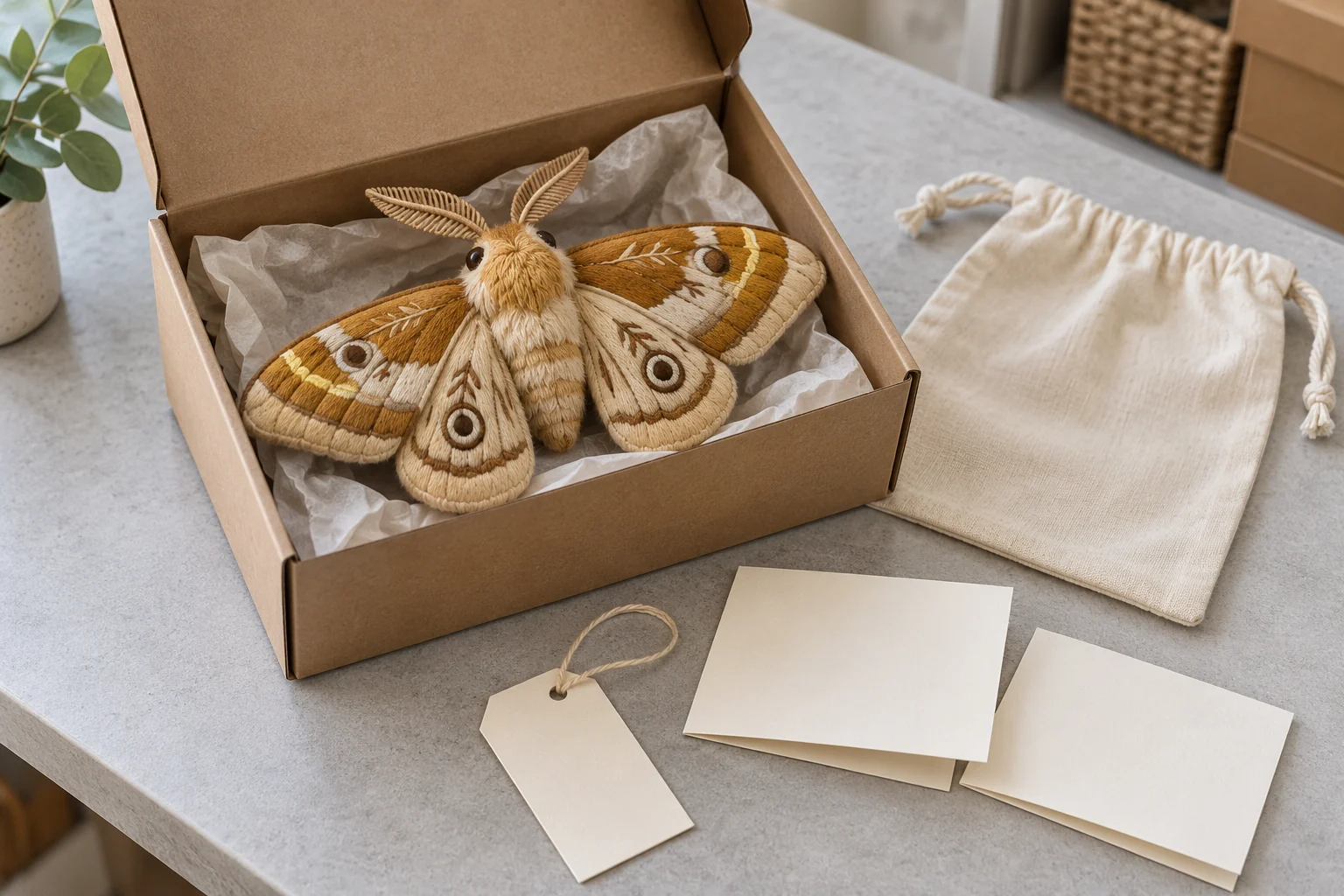
7. Approve the story label and packaging as part of the product
A tag may connect the plush to the collection, but it has to fit the physical product and the approved rights scope. Assign an owner for the final text, translation, credits and institutional logo. Keep interpretive copy distinct from any required product information or warnings.
Check the actual assembled pack. Does a tag cover the feature visitors should recognise? Does a sleeve compress the ears or leave a loose accessory unsecured? Can the item sit on the intended shelf without relying on a staged photograph? Confirm the packed dimensions and carton arrangement before estimating storage or freight.
If you include a QR code, test the final printed code and confirm that the institution will maintain the destination page. A code should supplement, not casually replace, information that must accompany the product. The plush packaging approval checklist covers how to pair packaging files with the correct sample version.
8. Send a brief that supports a comparable quotation
Your first enquiry does not need a finished technical drawing. It does need enough information to identify the open decisions. Copy this structure into your request and write “to be confirmed” where appropriate:
- Institution and project: collection or exhibition theme, permanent or temporary programme, purchasing contact.
- Design: authorised references, essential features, dimensions and any proposed accessories.
- Quantity: separate units for each design and variant, rather than a combined range total.
- Audience: intended age, destination market and retail, collectible or educational use.
- Approvals: curatorial, rights and commercial owners, with one feedback coordinator.
- Packaging: tag, label, bag or box requirements, languages and credit text status.
- Timing: exhibition opening, required warehouse arrival and available sample-review window.
- Quote scope: sample, bulk product, packaging, testing/documentation and shipping items to identify separately.
Contact Aokuma with your museum or gallery plush brief, including the design count, quantity per design and destination. We can review the proposed specification and identify what needs clarification before a project-specific quotation. Keep unresolved rights, compliance and delivery questions visible until the responsible parties confirm them.
