
To develop retro-inspired plush toys, turn the visual reference into a measurable product brief: silhouette, fabric surface, color, facial details, dimensions and intended use. Separate the features you want to evoke from any character or artwork you need permission to reproduce. Then approve the actual materials and finished sample rather than asking a manufacturer to “make it look vintage.”
This guide is for brands, gift retailers and merchandise buyers commissioning a new retro-style collection or an authorized reissue. It focuses on design and purchasing decisions, not predictions that nostalgia will increase sales. Your own audience research and selling plan should determine whether the range deserves investment.
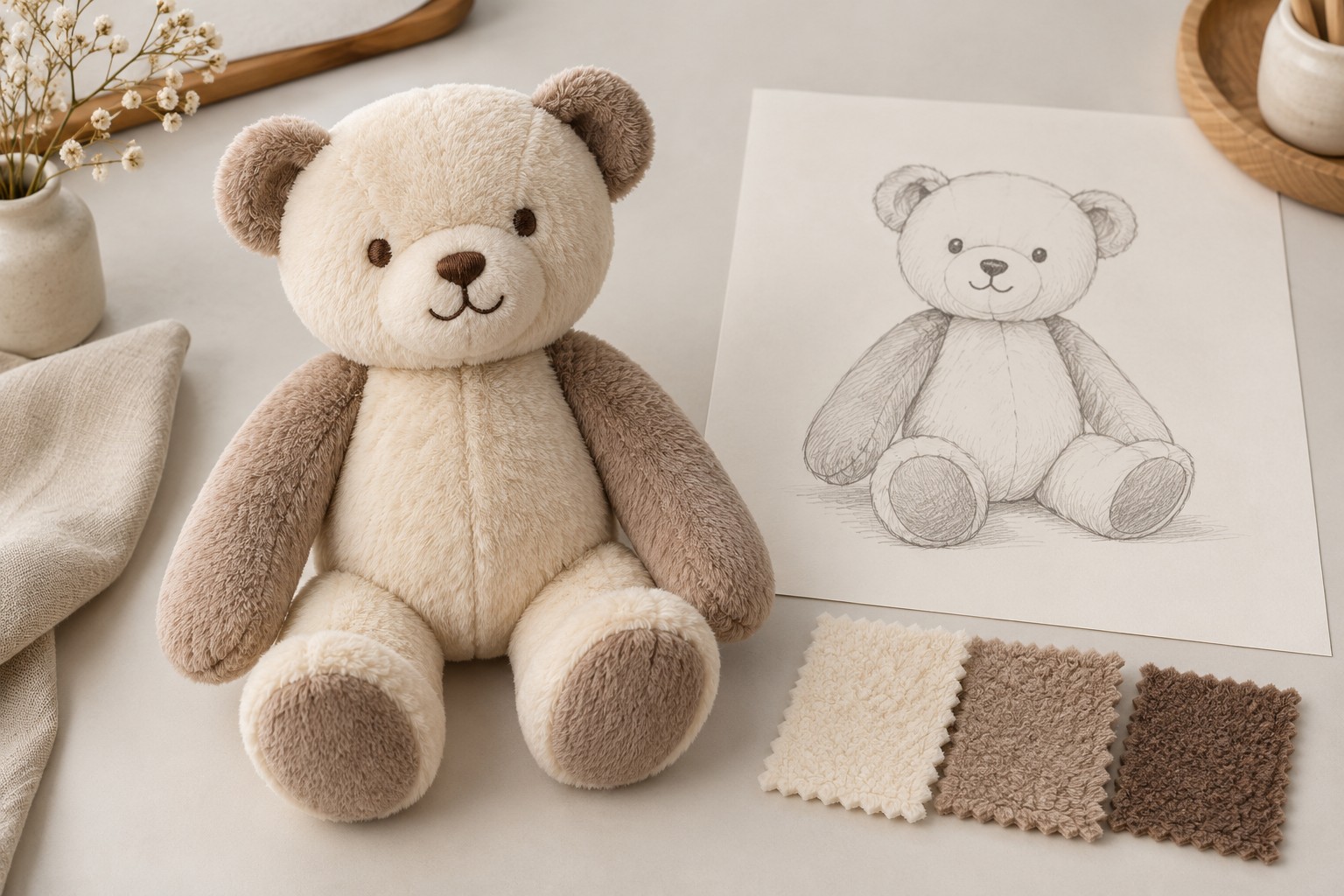
1. Decide whether you are creating a new design or reproducing an existing one
A new character with a muted palette and simple embroidered face is a different project from a reissue of an old branded toy. State which project you intend before sending references. For an original design, explain the broad visual qualities you like without instructing the supplier to duplicate a recognizable character. For an authorized reissue, identify the approved design version and the person responsible for rights approval.
A secondhand toy, old catalogue scan or image found online is not permission to reproduce the design. The U.S. Copyright Office explains that making a derivative version is among a copyright owner’s exclusive rights. Have your rights or legal adviser resolve the proposed use, relevant territory and any other applicable rights; the supplier should not be expected to infer permission from a reference photograph.
Record the source and permitted use of each reference. Confirm whether permission covers the three-dimensional item, packaging, promotional images and any proposed changes. If clearance is unresolved, keep the work at the discussion stage rather than presenting it as production-ready. The character-to-plush brief guide can help organize authorized artwork.
2. Replace “vintage style” with a ranked visual brief
Two buyers can use the same word to mean different products. One may want a compact, rounded bear with short fur; another may mean a floppy, long-limbed animal with a brushed surface. Build a one-page reference sheet with front, side and back views where possible. Mark what each image demonstrates instead of expecting the entire collage to be copied.
- Silhouette: head-to-body proportions, muzzle profile, ear position, limb length and seated or standing pose.
- Surface: smooth, short-pile, curly or ribbed appearance, with an actual swatch selected later.
- Palette: separate the body color, muzzle, paw pads, embroidery and accessories.
- Expression: eye spacing, nose shape, mouth position and whether asymmetry is intentional.
- Handling: soft and floppy, or a more structured display shape, demonstrated by a sample rather than an adjective alone.
Rank these features as essential, flexible or requiring a proposal. For example, a buyer might prioritize a broad muzzle and low-set ears while allowing the supplier to suggest a suitable fabric. That instruction gives development a clear decision route. “Exactly like the reference, but different” does not.
3. Specify a vintage appearance using new, defined materials
A worn-looking reference may reflect years of fading, compression or handling rather than its original construction. Decide which qualities belong in the new product. Use a specified color, pile texture or printed detail for the intended appearance; do not use an old toy’s condition as the material acceptance standard.
Ask for available fabric options and review labeled swatches. Record the selected material reference, composition information supplied, color and surface direction. Examine how the fabric looks around a curve and beside embroidery, not only as a flat rectangle. If a substitute is proposed later, require a comparison and approval rather than treating a similar photograph as equivalent.
For longer or textured surfaces, ask to see the facial detail on a small construction trial or finished sample. Check whether the eyes and mouth remain visible and whether trimming changes the expression. For ribbed material, mark the intended rib direction on the body and limbs. These are development checks, not guarantees that a particular fabric will perform identically in every design. The plush material-selection guide provides a broader discussion of material questions.
Describe any intentionally irregular stitching or color effect precisely. Do not confuse a decorative effect with loose seams, stains or inconsistent finishing. The approved sample should make the distinction visible to the production and inspection teams.
4. Compare samples against the same reference version
Start the sample review with dimensions and pose. Specify whether height is measured standing or seated and whether ears are included. Add width or depth where the plush must fit a shelf, presentation box or display hook. If the reference is an old physical toy, record its present measurements without assuming they represent its original manufacturing dimensions.
Use a consistent review sequence:
- Photograph the sample from the agreed front, side and back angles alongside the current design sheet.
- Check the silhouette and facial position before discussing small decorative details.
- Compare the selected swatches and finished color under agreed viewing conditions.
- Handle the sample to assess the intended softness, pose and feel; photographs alone cannot establish these.
- Record every change against a numbered photograph, with one person consolidating feedback.
Keep the decision specific: “reduce the muzzle projection to the marked profile” is more useful than “more nostalgic.” When changing fabric, filling or pattern shape, ask which previously approved features need another review. Do not approve the face from one version and assume the body from another will combine without checking a complete sample. Use the custom plush sample guide for the full approval workflow.
5. Define the audience before choosing decorative construction
Tell the supplier the destination countries, intended age group, sales channel and how the item will be presented. Calling a design “retro,” “premium” or “collectible” does not by itself resolve its classification. For the United States, CPSC describes several factors used to determine whether a product is primarily intended for children, including reasonable intended-use statements, presentation and consumer recognition.
Flag hard eyes, buttons, ribbons, removable clothing, jointing and weighted filling early. Ask the party responsible for compliance to review the actual construction and market requirements. An embroidered alternative may change the design, but it does not by itself establish compliance or suitability for a particular age.
Agree which product version and components the required documentation must cover, who arranges the review and what must be accepted before release. A vintage reference or a report for another design is not evidence for the new item. See the plush safety-document guide for questions to include in that discussion.
6. Plan each design and colorway before requesting prices
Aokuma’s standard MOQ is 500 pieces per design. List every proposed design, size and colorway separately and ask how variations will be treated in the quotation. Do not assume several different characters can share one minimum, or that all colorways can be combined without written confirmation.
For each line, provide the quantity, finished dimensions, fabric, decoration and packaging. Ask for alternatives only where you are genuinely willing to change the specification. Comparing a smaller short-pile version with a larger textured version can support a decision, but their quotations should remain separate so the reasons for a price difference are visible.
Choose the initial range using your own buying budget, audience evidence and storage capacity. A limited-edition label is not a demand forecast. If replenishment matters, retain the approved sample and versioned specification, and identify any materials that may need rechecking before a repeat order. The reorder specification checklist explains the records to preserve.
7. Carry the style into packaging without inventing provenance
Approve the packed product as well as the loose plush. Check that a sleeve or tag does not hide the face, compress a distinctive ear or prevent the item from sitting as intended. Confirm the final packed dimensions before estimating storage and shipping needs.
A muted palette or period-inspired typography can support the presentation. Claims such as “original,” “authentic reissue,” “handmade” or a historical launch date need a factual basis and any necessary approval. Keep required information and traceability readable; a decorative aged-paper effect should not obscure them.
Review the exact wording, artwork version, tag placement and pack fit together. If a licensed design requires credits or an approval mark, use the approved files and review route rather than inventing wording. Do not imply that a newly manufactured item is an antique.
8. Send a retro plush brief that can be quoted
Send Aokuma your retro-inspired plush brief with these details:
- Original design or authorized reissue, with the rights and artwork approval status.
- Reference sheet and three to five essential visual features.
- Finished dimensions, pose and measurement method.
- Proposed fabric, color, facial treatment and accessories.
- Quantity for each design and variation, plus the packaging requirements.
- Intended age group, destination market and requested documentation.
- Required receiving date, delivery destination and sample-review availability.
- Open questions and any acceptable specification alternatives.
Mark uncertain details as provisional. Confirm sample scope, commercial terms, documentation and delivery feasibility in the project quotation before committing to a launch. A clear retro-style brief preserves the visual idea while giving the supplier concrete features to develop and the buyer concrete points to approve.
