
For seasonal plush toys, start with three buying decisions: the last date the stock will still be useful, the quantity you can justify for each design, and what you will do with any units left after the occasion. Then approve the design, packaging and delivery plan around those decisions. A festive theme alone cannot establish whether an assortment is a sensible retail purchase.
This guide is for retailers planning a holiday collection and organizations buying plush for a fixed event, such as a graduation or annual celebration. It focuses on assortment and launch decisions. For the detailed order calendar, use our custom plush lead-time guide; for a comparable purchasing budget, use our plush quotation and cost guide.
1. Define the Selling Window Before Choosing the Theme
“For Christmas” or “for graduation” leaves important questions unanswered. Write down when shoppers or recipients need the plush, where it will be available, and when late inventory stops serving its original purpose.
- First selling or distribution date: when the product must be available in stores, online or at the venue.
- Required ready-to-use date: when the receiving team needs counted, checked and allocated stock, before customer availability.
- Latest useful receipt date: the point after which the planned launch or event distribution no longer works.
- End of the primary selling window: when the seasonal display, campaign or event finishes.
Keep these dates separate. A retailer may still sell a holiday design after its display opens, but lose valuable selling days. For a one-day event, arrival the following morning may remove the intended use entirely. Decide whether a reduced opening quantity would still be useful or whether the event requires the full allocation.
Also identify the final customer-order cutoff for online sales. Stock received before the holiday can still arrive too late for customers if fulfillment and last-mile delivery are overlooked. Use actual receiving and fulfillment arrangements to set these dates; there is no universal seasonal order cutoff.

2. Build the Assortment Around Quantity per Design
Start with the role of each item: one main seasonal character, a second design for a distinct audience, or a different size for a separate display or gift format. Add a variant only when you can explain who will choose it and how many units that audience supports.
Aokuma’s minimum is 500 pieces per design. Ask which size, colorway and outfit changes are treated as separate designs; do not assume their quantities can be combined. A collection total does not replace a quantity decision for every design. Review the MOQ and variant guide before dividing the order.
Illustrative assortment comparison: four distinct designs at 500 units each commit you to 2,000 units. One design at 1,000 units and a second at 500 commit you to 1,500 units. These are arithmetic examples, not recommended order sizes or demand forecasts. The narrower collection is appropriate only if the two chosen designs fit your customers.
Give each proposed design a simple record:
- Customer or recipient group and reason for including it
- Finished size, colorway and identifying design reference
- Quantity allocated to each store, online channel or event location
- Units needed for displays, photography or agreed non-sale uses
- Evidence behind the quantity and a plan for remaining stock
Keep different outfit versions visible in the brief too. Ask how each clothing or decoration variation will be treated for sampling, production and minimum quantities. A shared plush body does not by itself establish that several versions can share one minimum.
3. Decide How Permanently the Occasion Belongs on the Plush
A year embroidered onto the body makes the occasion part of the finished item. That may be important for a commemorative purchase, but it also limits how you can present unsold units later. Choose it deliberately rather than adding a year at the final artwork review.
| Approach | Useful question | What to verify |
|---|---|---|
| Year or event name on the plush body | Is the dated keepsake essential to the purchase? | Exact text, placement, approval authority and residual-stock plan |
| Seasonal clothing on an established character | Does the outfit provide enough event identity? | Fit, decoration, attachment, safety review and variant treatment |
| Seasonal hang tag, sleeve or gift box | Can packaging carry the campaign message? | Artwork, required labels, assembly and any later repacking work |
| Undated seasonal design | Could this remain relevant beyond one calendar year? | Storage suitability, brand permissions and future merchandising fit |
Changing a tag later is an option to assess, not a promised low-cost solution. Check whether required information is affected, who would do the work, and whether the product can still be represented accurately. Similarly, removable clothing needs its own construction and safety review; do not assume an accessory can be detached or replaced without consequences.
For licensed characters or partner branding, confirm permission covers the proposed product, channels and selling period. Do not base the leftover-stock plan on another season or market until the relevant rights have been checked.
4. Turn Personalization into a Production Decision
“A bear with a personalized scarf” could mean one message repeated across the batch, different messages for several groups, or an individual name on every unit. Those are different briefs. State which you need and provide the text and artwork before requesting confirmation.
For seasonal clothing, show the complete dressed plush and a close view of the decoration. Specify the spelling, date format, logo position, thread or print color, and how much text must remain visible when the toy is displayed. If a scarf wraps around the neck, check the message in its final position rather than approving only a flat artwork file.
For multiple messages, create a version list with a quantity against each one. Identify who will check that the correct version reaches each location. Confirm feasibility, charges and packing identification for individual-name customization separately; it should not be assumed to be included in a standard batch.
Our plush mascot clothing specification guide provides the detailed outfit brief. For a seasonal collection, the key decision is which personalization is essential to the occasion and which can be removed before approval if it makes the project unsuitable.
5. Test the Quantity Against a Short Selling Window
Use your own comparable sales, store allocations, registrations or confirmed recipient counts as starting evidence. Keep a customer commitment separate from a forecast, and a forecast separate from an aspiration. Avoid counting the same audience twice across an event and an online store.
For retail, write a lower-demand case alongside the working forecast. Estimate the units remaining at the end of the primary selling window, then decide whether storage, later sales or another approved use is realistic. Include the operational work and likely recoverable value of that choice in your internal review. Do not assume a clearance campaign will recover the purchase cost.
For event distribution, check eligibility and allocation rules. Does one registered guest receive one plush, or does each participating group receive a set? Who approves a reserve quantity, and where will unused units go? A reserve should have a stated purpose rather than being hidden inside a rounded order total.
Review the total commitment before increasing quantities for a lower quoted unit price. The extra units still need a use. Keep the pricing comparison in the cost guide and use this seasonal review to decide whether the additional inventory belongs in the plan.

6. Freeze the Seasonal Details Before Release
Choose one person to consolidate the final design decision. For dated merchandise, the approval record should include the plush, outfit, event wording, labels, packaging and design-by-design quantities. A correct body sample with an unfinished year graphic is still an unfinished seasonal specification.
Before approving release, check the following together:
- The event name, year, logo and colors match the approved campaign
- The physical sample and final artwork refer to the same version
- Clothing and accessories sit correctly on the finished plush
- Retail or event packaging has been approved with the product inside
- The intended age group, sales markets and applicable safety requirements have been reviewed
- The supplier has assessed the agreed specification against the required ready-to-use date
Use destination-specific guidance with your compliance contact. For example, the U.S. CPSC’s toy-safety business guidance explains that applicable requirements depend on the product. Confirm the requirements and evidence for the actual plush and accessories; visual approval of a sample is not a substitute for that review.
Aokuma’s standard sample fee is USD 200 for each design, covering up to three revision rounds. Standard sample making takes 7–10 working days, with review, revisions and approval timing agreed for the project. The fee is refundable at an order of 3,000 units of the same design. Shipping, testing and special cases have separate, quote-specific scope; the sampling window is not a delivery promise.
After the freeze, record any requested change and obtain its consequences before approval. Even a small year, logo or packaging change may affect more than the visible artwork.
7. Check Receipt and Retail Readiness Together
Ask the people who will handle the stock to review the packing plan. Store staff may need individually identified items ready to scan; an event team may need cartons allocated by venue and distribution session. Those needs should be visible before packing starts.
- Receiving: confirm the delivery address, contact, booking process and carton information the receiver needs
- Inventory: map each design and version to the correct internal item code and allocation
- Presentation: check tags, barcodes where required, retail pack dimensions and display fit using the approved configuration
- Distribution: agree who unpacks, counts, dresses or repacks the plush, if any of those tasks remain at destination
- Exceptions: identify who handles shortages, damage or a mixed design allocation before stock is offered to customers
Decide whether individual bags, gift packaging or bulk packing suits the handling method. Excluding individual packaging from a request does not automatically establish a saving or an acceptable protection method. Confirm the revised packing scope and its effect on receiving work. See individual bags versus bulk packing for event plush and the combined plush packaging approval checklist.
Prepare sales listings and event instructions from the approved product version. Update photographs or descriptions if a later approved change alters what the customer will receive.
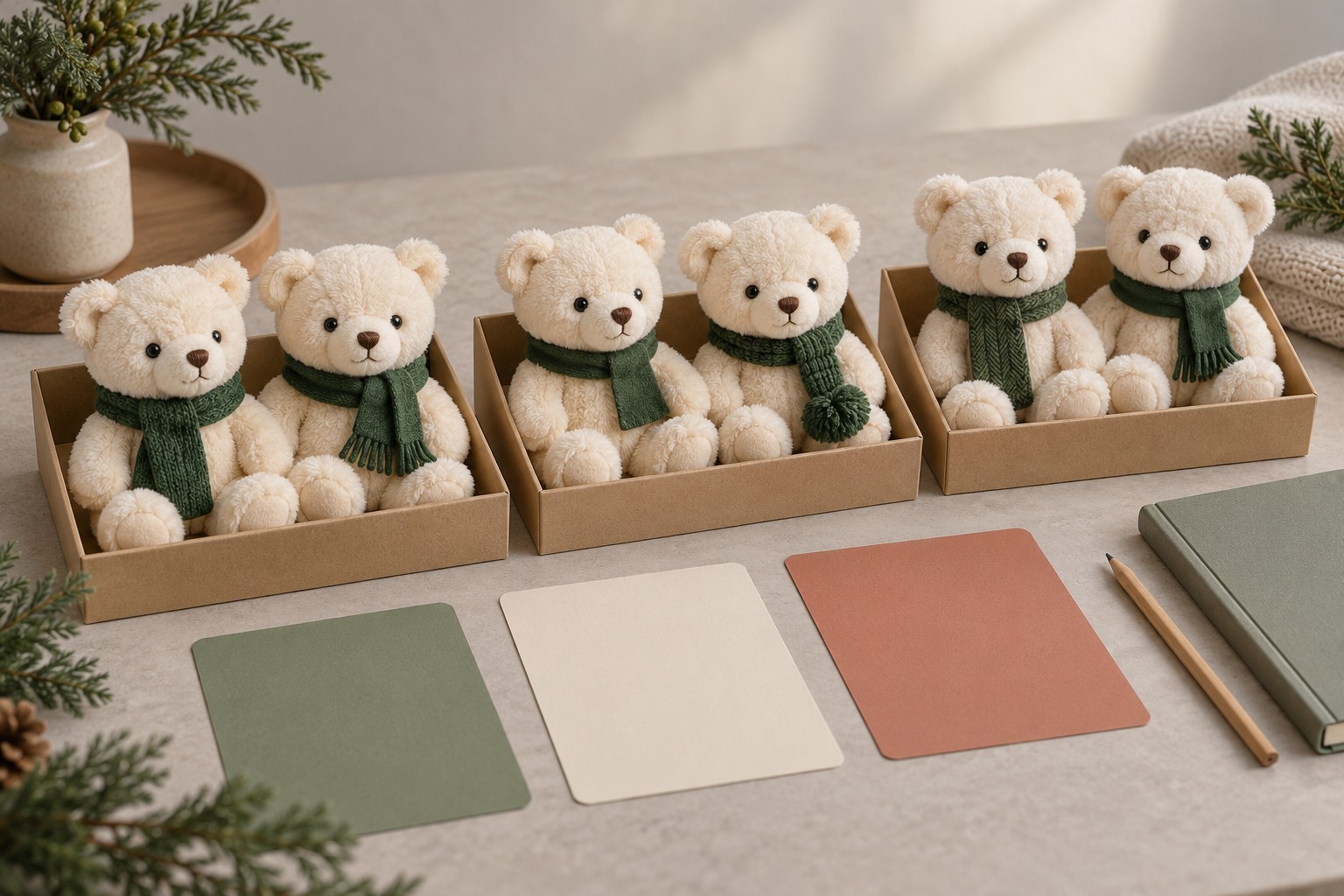
Reconcile Store and Online Allocations Before Launch
A seasonal order can be the right size overall and still leave the wrong stock in the wrong place. Build one allocation sheet for each design and approved version. Give every unit a destination or a named purpose, then check the sheet against the order quantity. Keep this separate from the forecast: the forecast estimates demand, while the allocation tells the receiving team where the goods should go.
Use one row per destination and version. Include the location code, selling channel, planned quantity, opening display quantity, ready-to-use date, delivery route and person confirming receipt. Identify whether the quantity includes display pieces. If a store needs ten units for a display and forty available for sale, “fifty units” should not become fifty saleable units plus ten more for the display.
A Worked Allocation Example
Hypothetical planning example, not a demand forecast or an order recommendation: a retailer orders 1,000 units of one seasonal design. It allocates 250 to Store A, 180 to Store B, 120 to Store C, 300 to online fulfillment, 20 to non-sale display and photography use, and 130 to a central reserve. The total is 1,000. The 850 units allocated to selling channels exclude both the 20 non-sale units and the 130-unit reserve.
Now suppose the online channel already has 90 confirmed customer orders. If those orders are included in its 300-unit allocation, only 210 units remain within that allocation for further orders. Do not subtract the 90 from central stock and also leave all 300 available online. Record the reservation once, against the correct location and product code. This simple check matters when a shop, website and event team all work from the same stock pool.
If Store B later requests another 40 units, record an approved transfer from the reserve: Store B becomes 220 and the reserve becomes 90. The order total remains 1,000. Do not add the request to the store list without reducing its source allocation. A transfer is only a proposed allocation until the team confirms that the goods can reach the store before its useful selling window closes.
Use a Different Readiness Date for Each Destination
Central warehouse arrival is not the same as store readiness. Work back from each location’s selling date using the receiving, checking, repacking and onward movement actually required. A store supplied through a distribution center may need an earlier warehouse receipt than an online channel that fulfills directly from the same building. Confirm the relevant operating days and booking arrangements with the teams involved rather than applying one assumed allowance to every route.
Mark each allocation with a simple operational status:
- Planned: quantity and destination proposed; availability or route still needs confirmation.
- Received, awaiting checks: goods counted at that location but not yet cleared for the intended sale or distribution.
- Ready: the agreed receiving checks and preparation are complete, and the local owner has confirmed the usable quantity.
- Exception: a shortage, wrong version, damaged pack or unresolved requirement prevents some units from being used as planned.
Keep the exception quantity visible instead of marking a whole delivery simply “arrived.” For example, if 250 units reach Store A but 12 are set aside for investigation, record 238 ready and 12 on hold. Do not automatically put the held units back into availability because the launch date is close. Follow the agreed review process and update the count when a decision is made.
Make the Last Pre-Launch Check Actionable
Before opening sales, ask each location owner to confirm the design reference, usable quantity, correct packaging or event wording, and actual ready date. Reconcile those confirmations with online reservations and the reserve balance. A photo of a full carton cannot establish the number of usable selling units or prove that the correct seasonal version is inside.
For any gap, record the affected location, quantity, next decision owner and decision deadline. Possible internal responses include reallocating confirmed stock, reducing a local display or revising availability information. Check feasibility before presenting an alternative to customers. Keep paid orders, promotional promises and uncommitted forecasts distinguishable when deciding priorities; do not silently reassign stock already reserved for an accepted order.
This sheet should accompany the seasonal brief when destination-specific packing is requested. Ask the supplier to confirm the packing scope and quote any extra work rather than treating the spreadsheet as an accepted service commitment. For the underlying handling choices, see individual bags versus bulk packing for event plush.
8. Use a Go/No-Go Worksheet Before Committing
The worksheet below is a suggested purchasing tool, not an Aokuma order condition or a promise of availability. Fill in named owners, actual dates and supporting records. An unresolved item should have a next decision, rather than being treated as approved.
| Decision | Record before proceeding | If unresolved |
|---|---|---|
| Useful selling window | First availability, latest useful receipt and window end | Clarify the deadline before assessing feasibility |
| Assortment and quantities | Units per design, destination allocations and demand basis | Reduce or revise the proposed assortment before commitment |
| Dated design exposure | Which details expire and what happens to remaining stock | Reconsider permanent dating or the inventory quantity |
| Approved specification | Sample reference, clothing, wording, packaging and approver | Keep the affected release decision on hold |
| Safety and acceptance | Applicable requirements, responsible reviewer and required evidence | Resolve the requirement; do not waive it for the event date |
| Useful arrival | Project-specific plan to usable inventory at the named location | Assess an alternative or stop before placing an unsuitable order |
| Total commitment | Approved quote scope and maximum budget for alternatives | Get approval before accepting extra work or charges |
| Fallback decision | Trigger date, decision owner and acceptable alternative | Choose a fallback while options can still be assessed |
Add these fields below the worksheet: review date; owner for each open item; next decision date; overall status; approved action. A conditional go should say exactly what must be resolved before the next commitment. Do not leave “delivery to be confirmed” buried beneath an unconditional launch approval.
9. Agree on the Fallback Before the Window Closes
Set a decision trigger based on the remaining useful selling window. If the confirmed plan no longer supports that window, review the commercial choice immediately rather than repeatedly keeping the original launch date in place.
Possible alternatives to assess include a smaller first allocation, a different approved packing format, a revised launch, or reserving the plush for another suitable occasion. Each needs fresh confirmation of feasibility and consequences. A split shipment only helps if the first quantity can actually be completed, released, transported and used in time; see our split-shipment planning guide.
Name the person who may approve extra expenditure and the maximum amount they can authorize. Before changing or stopping an existing order, check its agreed terms and the work already committed. A no-go decision in an internal worksheet does not cancel a purchase or establish a refund right.
Frequently Asked Questions
Can I divide 500 units among several seasonal designs?
No. Aokuma’s minimum applies to each design. List every proposed size, colorway and outfit version with its quantity so the supplier can confirm how the assortment will be treated.
Should a holiday plush include the year?
Use permanent dating when it serves a clear commemorative purpose and you can justify the quantity. Compare it with undated artwork or campaign packaging, checking any repacking work, labeling and brand permissions before relying on future reuse.
Can a new seasonal outfit be approved without reviewing the whole plush?
Review the dressed product as well as the outfit artwork. Fit, attachment, visible wording and applicable safety requirements concern the finished configuration. Ask what sampling and verification the change requires.
What if stock arrives after the event?
Follow the contingency and order terms agreed for the project. Assess whether the goods have another suitable use, but do not assume a dated product remains useful or that a late arrival automatically creates cancellation or refund rights.
Send a Seasonal Brief That Can Be Evaluated
Contact Aokuma for a seasonal plush project review with artwork you are authorized to use, finished size, quantity per design, intended age group, sales market, clothing or personalization, packing requirements and delivery destination. Include the first selling or event date, required ready-to-use date and latest useful receipt date.
Flag permanent years or event wording and explain whether a partial first allocation would be useful. These details let us assess the actual assortment and delivery request. Confirm the final specification, quotation and project-specific schedule before committing to the launch.
