
Soft toys are made by turning a design into fabric patterns, cutting and decorating the panels, sewing a shell, adding filling, closing the opening and finishing the product. For a custom order, the important work also includes defining the specification, approving a reference and checking the goods before shipment.
The sequence varies with the construction. A face may need embroidery while its panel is flat; an attachment may need to be secured before the body is closed. Buyers should ask what must be decided before each operation, which evidence will show progress and who can authorize a change.
This guide maps the process from fabric to finish and gives you a practical worksheet for discussing your own plush order.
What Is Plush Toy Manufacturing?
Plush toy manufacturing combines pattern development, textile assembly and finishing to create a three-dimensional soft product. The pattern determines how flat pieces join; the fabric and filling help determine the resulting appearance and feel.
For a primary manufacturing example, Steiff’s published teddy-bear process shows how sketches become patterns, fabric pieces are cut and sewn, and filling helps create the final form. That example illustrates construction principles; it does not establish Aokuma’s equipment, sequence, capacity or schedule.
For procurement, the deliverable is broader than a sewn character. Define whether the order includes clothing, attachments, labels, individual packing and shipping cartons. Those items have their own references and decisions, even when they arrive together.
Where Are Soft Toys Made, and Does Location Matter?
Aokuma’s published contact address is in Dongguan, Guangdong, China. When comparing sourcing locations, focus on the actual supplier and production arrangements: who develops the pattern, performs decoration and sewing, manages bought-in components and coordinates inspection.
Ask which operations are performed at the proposed facility and which involve other suppliers. Confirm the contact responsible for those handoffs. A country label or a general factory photograph cannot establish the workflow, available capacity or delivery date for your particular design.
What Are the 8 Stages of Plush Toy Production?
The following eight stages are a useful planning framework. Some overlap, and some repeat during development. Agree the sequence and checkpoints with the supplier rather than treating the list as eight fixed blocks of factory time.
1. Define the design and order scope
Start with artwork, intended size and posture, quantity by version, destination market and intended age group. Identify the features that must survive translation into plush: a particular expression, an uneven silhouette or a recognizable logo.
Ask the supplier to flag unclear or difficult details before quoting. For a small keychain design, ask which facial details, proportions and attachments need review before you finalize the artwork. Record unresolved choices, such as removable clothing or a retail box, so an attractive reference image does not silently become an agreed inclusion.
2. Develop the pattern and sample reference
Pattern pieces turn the character into an assembly that can be sewn and filled. Review the resulting sample for shape, proportion and the interpretation of the artwork. If likeness is your main concern, identify the expression and proportions that matter most, with marked-up views. Ask how they will be assessed on the physical sample before committing to bulk production.
Record the approved version and any remaining decisions. For development feedback, revision rounds and approval records, use the custom plush sample guide. The process handoff needs a clear reference that subsequent operations can follow.
3. Prepare materials and cut the panels
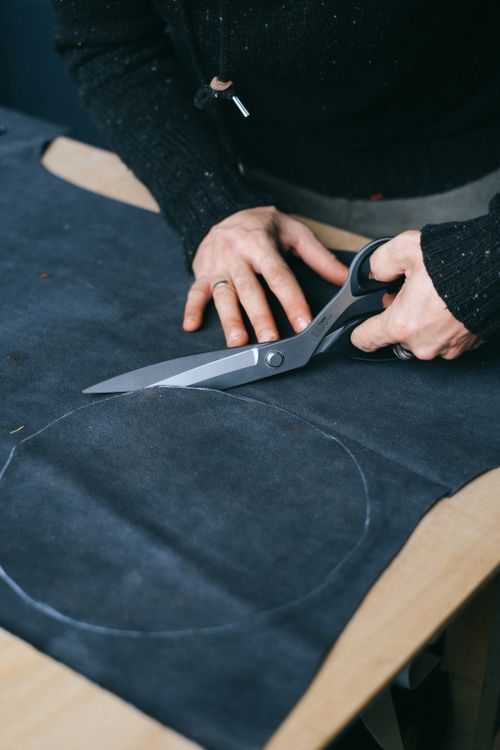
Confirm the fabric reference, colors and construction details before cutting material for the order. Cutting produces the panels that will become the body, limbs and other sewn parts.
Where directional pile matters, ask how its orientation is specified. Steiff’s manufacturing example specifically describes aligning cut pieces with the fabric and pile direction. A useful buyer checkpoint is a material identification record and labeled panel or early-assembly evidence, with the agreed version visible.
4. Add embroidery, printing or appliqué
Decoration translates approved artwork into the surface details of the product. Confirm the method, placement, scale and color reference for each feature.
Ask to review the feature in context: a close-up can show a letter clearly while hiding that the whole logo sits too low. The supplier should explain when decoration occurs in the chosen construction and what must be approved before it proceeds.
5. Sew the shell and assemble its parts
The panels are joined into the toy’s shell, with parts attached according to the construction. The assembly must retain the access needed for subsequent operations.
For an early production review, ask for views that show the silhouette and relevant joins. Identify the specific units and reference version. Avoid treating an unfilled shell as conclusive evidence of finished proportions; agree which characteristics can be assessed at that stage.
6. Fill, shape and close the opening
Filling gives the shell its volume, after which the filling opening is closed. Assess the completed toy’s posture, feel and distribution of filling against the agreed reference.
If weight is specified, record it alongside the other checks. Weight alone cannot describe where filling sits or whether the character holds its intended shape. Ask the supplier how the agreed closure will be identified and checked on the finished product.
7. Finish the toy and prepare its packaging
Finishing can include trimming loose threads, arranging the surface pile and adding approved clothing, labels or accessories, depending on the design.
Check that the finished product matches the packing plan. A change to the toy’s posture or accessory can require another fit review. Keep packaging artwork, components and quantities identifiable; the packaging approval checklist covers those decisions in detail.
8. Verify the goods and authorize shipment
Review the agreed inspection evidence, product-safety documentation where applicable and packing status. Record open issues and who can decide the next action.
Inspection, testing, packing and shipment release may have different completion points. A satisfactory workmanship report cannot resolve a missing label decision or an unfinished testing requirement. Use the sample-to-bulk production guide for the detailed release handoff.
Why can the process order change?
The sequence depends on access, construction and the evidence needed for the next decision. For example, the supplier may propose decorating an accessible panel before assembly, inserting a seam label during sewing or preparing packaging while approved production work continues.
These are planning examples, not instructions for every design. Ask which tasks can overlap and which must wait. Material selection, safety review and quality checks should be planned from the start, even when their final records are completed later.
Keep a dependency note beside each milestone: “can begin after fabric approval,” “requires revised face reference” or “packing waits for approved carton marks.” This is more useful than adding generic stage durations together.
A stage, evidence and responsibility worksheet
Copy this worksheet into the order discussion. Replace the suggested roles with named contacts and add the reference version, due date and unresolved decision. The entries are proposed planning responsibilities, not a statement of services automatically included in a quote.
| Stage | Evidence to agree | Responsibility to assign |
|---|---|---|
| Design and scope | Artwork revision, variant quantities, inclusion list | Buyer confirms requirements; supplier flags open questions |
| Pattern and reference | Identified sample and approved changes | Supplier prepares; named buyer reviewer approves |
| Materials and cutting | Material references and relevant panel checks | Supplier confirms inputs and reports discrepancies |
| Decoration | Artwork version, detail and placement views | Supplier provides evidence; reviewer resolves differences |
| Sewing | Assembly views and agreed in-process findings | Production contact coordinates corrective work |
| Filling and closure | Finished shape, feel and specified measurements | Assigned checker compares with the reference |
| Finishing and packing | Labels, pack version, fit and quantity records | Packaging contact confirms readiness and exclusions |
| Verification and shipment | Reports, outstanding issues and release record | Relevant specialists review; authorized contact releases |
Ask for evidence in time to act on it. A cutting-stage photograph received after the entire order is sewn has limited value for an unresolved fabric decision. Agree how a discrepancy pauses the affected work and how revised instructions reach the people performing it.
What Materials Are Used to Make Plush Toys?
Define materials by their role: outer fabric, filling, decoration, internal or external components, labels and packaging. For each, identify the chosen reference and any approval or documentation needed.
Descriptions such as “minky,” “short-pile plush” or “soft filling” are starting points for discussion. Request the actual swatch or material specification rather than assuming that a name fixes the appearance, composition or performance.
List substitutions that need review. A replacement fabric may warrant checking the sample again; a changed attachment may affect construction and the safety assessment. For recycled-content or other material claims, ask what evidence supports the exact claim for the supplied product. See our materials selection guide for a fuller specification discussion.
How Are Plush Toys Inspected and Tested for Safety?
Workmanship inspection compares the goods with agreed requirements. Product-safety evaluation addresses the applicable requirements for the product and selling market. Plan both; completing one does not automatically complete the other.
Where acceptance sampling is used, agree the lot, selection method, checks and acceptance criteria. NIST explains that its purpose is a lot-acceptance decision, rather than an estimate of the lot’s exact quality. An AQL value is part of a sampling scheme, not a guaranteed maximum defect percentage in every shipment. Sampling carries acceptance and rejection risks, as described in NIST’s sampling-plan guidance.
For the United States, CPSC’s Toy Safety Business Guidance explains product-specific requirements, including stuffed-toy seam requirements and applicable testing and certification responsibilities. Establish the relevant requirements with the responsible compliance reviewer and laboratory, including CPSC-accepted third-party testing where required. Other markets need their own review.
For the inspection brief, defect evidence and handling of incomplete or unacceptable results, use the plush toy quality inspection guide.
What Should Indie Creators and B2B Buyers Know?
Creators and sourcing teams need the same core decisions: a defined product, a controlled reference, clear inclusions and someone authorized to approve changes. A creator may handle these personally; a larger team should identify which reviewer owns artwork, purchasing, compliance and logistics.
Aokuma’s standard minimum is 500 pieces per design; different sizes or colorways count separately. The standard sample fee is USD 200 per design, includes up to 3 revision rounds and is refundable when you order 3,000 units of the same design. Standard sampling takes 7–10 working days. Special cases are quoted and agreed separately. Confirm sample shipping, testing, changes and approval timing in the quotation; these terms do not establish a bulk-delivery date. See the current Aokuma FAQ.
Three hypothetical decisions during production
Approval: A buyer approves the character’s expression but has not chosen its clothing. Record the limited approval and ask what work can safely proceed. Do not leave the production team to infer that every feature is final.
Change: After panels are cut, the buyer requests larger ears. Ask which materials and operations are affected, whether another reference is needed and what cost or schedule changes require approval. Record the decision before affected work resumes.
Rework: An in-process check finds that an embroidered mouth differs from the agreed artwork. Identify affected work, assess the correction and agree the evidence needed to verify it. A repair photograph alone does not establish that all affected units were corrected. Cost responsibility depends on the agreed order terms.
Frequently Asked Questions
What materials are used to make plush toys?
The specification should identify outer fabrics, filling, decoration, attachments and labels, plus any internal components. Request actual references and composition information for the proposed materials. Generic material names are insufficient to approve a finished product.
How long does it take to manufacture a plush toy?
Request a project schedule separating sample development, approvals, materials, bulk production, verification and shipping. Ask what starts each stage and which decisions remain open. A production estimate and an arrival date describe different milestones.
What is the difference between minky and short-pile plush?
Ask the supplier to identify the specific fabrics being compared. Compare swatches, stated composition, surface texture, pile and the effect on the sample. Approve the chosen reference rather than relying on a fabric name alone.
How are stuffed animals tested for safety?
The test scope depends on the product, intended users, materials, features and destination market. Confirm applicable requirements and documentation with the responsible compliance reviewer. Visual inspection and an improvised pull check do not establish safety compliance.
What should I check when sourcing plush toys from China?
Verify the supplier’s relevant production arrangements, sample process, material references, responsibilities and proposed schedule. Ask how outsourced operations and discrepancies are managed. Evaluate the evidence for your order rather than assuming every supplier follows the same process.
From Fabric to Finish: Turn the Process into a Clear Brief
A useful production plan connects each operation to an agreed reference, evidence and a decision-maker. It also shows what happens when a material, design feature or result changes.
Send Aokuma your project for a quotation with artwork, target size and measurement method, quantity per design, size and colorway, intended age group, destination market, packaging needs and required arrival date. Highlight unresolved choices. Ask the quotation to identify included work, separate charges, approval checkpoints and the assumptions behind the proposed schedule.
