
To order custom plush toys for a theme park, define the character, intended use, quantity per design, approval owners and warehouse arrival requirement before requesting a quote. Then develop a physical sample and confirm the packaging, safety documentation and stock-allocation plan. A single park-wide quantity is not enough when several characters, sizes or distribution channels are involved.
This guide is for merchandise and procurement teams planning original mascot souvenirs, game prizes or event gifts. It focuses on the decisions that connect an approved character to stock your team can receive, identify and distribute. Sales forecasts, production capacity and delivery dates still need project-specific review.
Have your artwork and an initial quantity plan ready? Send Aokuma your project brief, including which details remain undecided. Aokuma’s current MOQ is 500 pieces per design; list size and color variants separately so the team can confirm their quotation basis.
1. Give each plush item a clear job in the park
A retail souvenir, a game prize and a pre-booked event gift may use the same character but have different operational requirements. Decide the role before choosing accessories or packaging. Otherwise, a product approved for a shelf display can arrive with packaging that slows down a prize counter or with no practical way to identify an event allocation.
- Retail souvenir: specify display orientation, barcode position, hanging or standing presentation, and whether the guest will carry it around the park. Check the packed item against the actual shelf or hook arrangement.
- Game prize: state how staff will store and hand out the item, the space available behind the counter and any equipment constraints. If a machine is involved, arrange a trial with the actual sample and machine; a size description alone cannot establish compatibility.
- Event gift: identify the recipient group, collection point and distribution window. Decide whether individual bags are useful or simply create extra unpacking work.
Keep the channels separate in the stock plan even when they share one manufactured SKU. A transfer from retail stock to a promotional event should be recorded, so the next reorder is based on a meaningful picture of sales and allocations rather than an unexplained total decline.
2. Translate the mascot into an approval-ready specification
Provide approved front, side and back views where available. Mark the features that make the character recognizable: eye spacing, muzzle shape, ear angle, body-to-head proportion, color placement or a distinctive accessory. A drawing can hide decisions that become visible in three dimensions. State which features are essential and which may be simplified after your review.
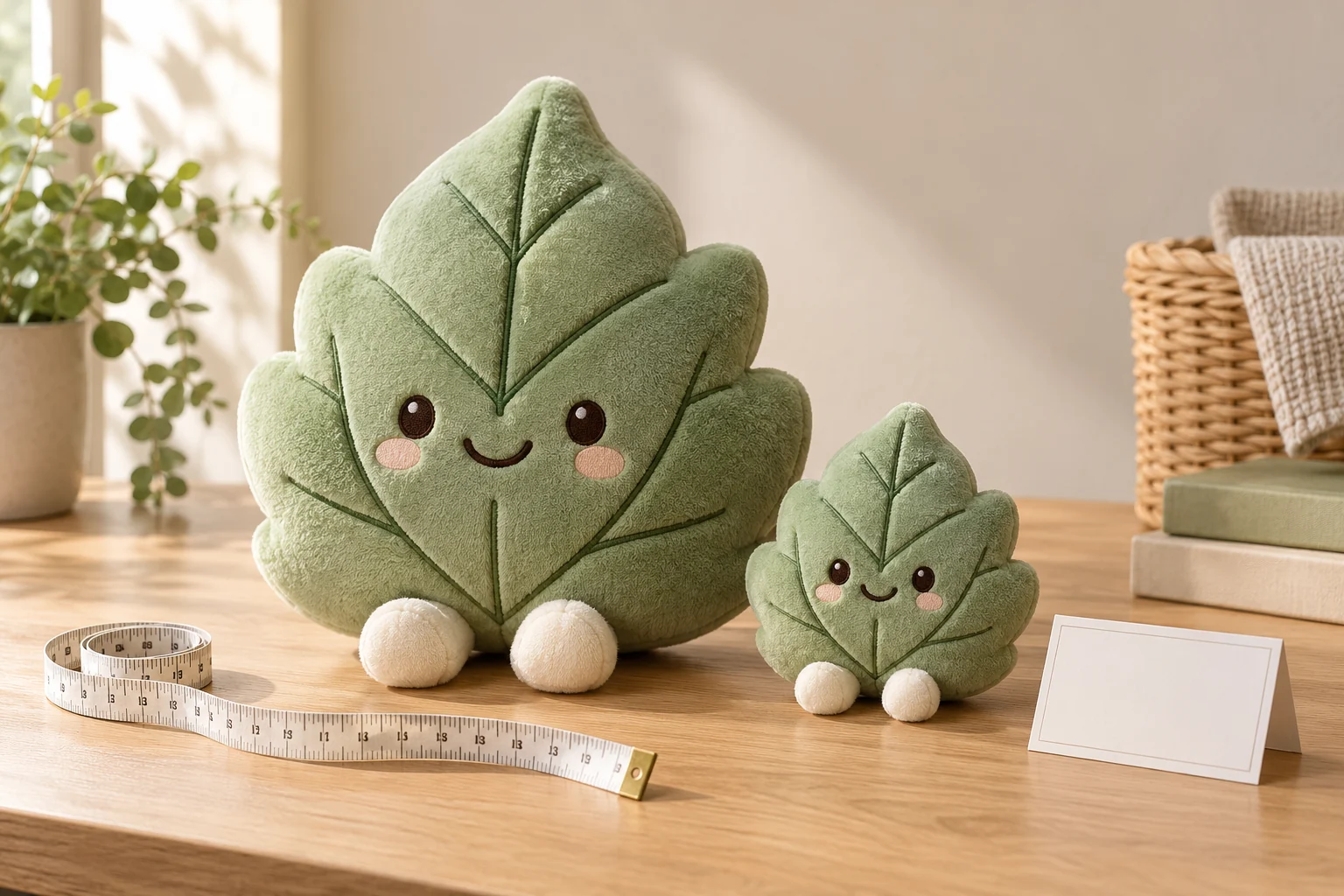
Give dimensions with a measurement method. For a sitting character, distinguish body height from total height including ears; for a long-tailed design, distinguish body length from the overall footprint. If two sizes are planned, do not assume that scaling one pattern will preserve the same expression, balance or accessory fit. Review each size as its own product specification.
Use a short approval sheet with three columns: required feature, reference and decision owner. For example, the creative team can approve the face and silhouette while merchandise staff check display stability and packaging fit. Combine feedback before sending it to the supplier. Conflicting comments from separate departments make it difficult to establish which version should be followed.
For licensed artwork, establish the right to make and distribute the merchandise before sharing production instructions. The U.S. Copyright Office’s permission guidance explains the need to obtain permission for protected uses of another owner’s work. Your own agreement must also be checked for product categories, territory, channels, artwork versions and approval requirements. This article does not determine the scope of a license.
3. Build the range from quantities per design
Start with a line-by-line range sheet rather than a list of favorite characters. For each item, record the character, size, colorway, accessory, requested quantity and intended channels. A project containing several designs needs a separate quantity decision for each. Do not divide a 500-piece total across a character collection and assume the resulting quantities satisfy Aokuma’s MOQ.
If the first launch budget is limited, consider whether one well-defined character should be developed before a broader range. This is a planning option, not a promise that other designs can be ordered below the minimum or that a particular character will sell best. Use your own comparable product sales and visitor context to decide what deserves the first production commitment.
Separate three numbers in your working plan: the amount ordered from the supplier, the amount allocated to each destination, and the reserve held centrally. The allocations should reconcile to the ordered quantity. Reserve stock remains part of the order; it is not additional free inventory. Identify who may release it and how transfers will be recorded.
Keep seasonal accessories visible in the SKU list. A scarf change may look small on a mood board but can affect artwork, material sourcing, attachment, packaging or the sample approval. Ask for the variant’s cost and quantity treatment rather than assuming the base character’s quotation covers it. The custom plush MOQ guide explains how to prepare the quantity information for review.
4. Approve the sample in the order decisions depend on it
A useful sample review begins with character fidelity and the physical specification, then checks accessories, packaging and operational handling. Photograph front, side and back views consistently. Mark a correction on the relevant image and explain the intended change. “Make it cuter” gives less usable direction than identifying the eye position or muzzle proportion that needs adjustment.
Aokuma’s standard initial sample policy is USD 200 per design, approximately 7–10 working days, with up to three revision rounds. The sample fee is refundable on a bulk order of 3,000 pieces of the same design. Confirm the scope and conditions in your project quotation; exceptional designs or requirements are quoted individually. These sample terms do not confirm the full project’s production or arrival date.
Distinguish a correction to the agreed brief from a new requirement. Changing the character’s pose, adding another size or introducing a sound component after review can change the work involved. Ask for the cost and schedule effect before accepting the change. Keep the approved version identifiable and retain its photos, dimensions and written decisions together.
Do not approve a whole range from one representative photo. A sample of the most detailed character may help reveal difficult features, but it does not settle the appearance or fit of the remaining designs. Agree which physical samples and packaging proofs are needed for each SKU. For a fuller correction workflow, see the custom plush sampling guide.
5. Match packing to receiving and daily replenishment
Explain how the park receives goods: one central warehouse, several locations or an outside logistics partner. Then specify whether cartons should contain one SKU or an agreed mixed assortment. Single-SKU cartons can be easier to count; mixed cartons may support a planned destination allocation, but only when the contents are clearly documented. Choose based on your receiving process rather than assuming either method is always better.
Confirm carton identifiers, SKU descriptions, quantities and destination codes with the supplier. These operational marks should help staff distinguish similar characters without opening every carton. Keep their wording consistent with the packing list and your inventory records. Ask for proposed carton dimensions and packed weights when the product and packing method are sufficiently defined; estimates need confirmation before freight is booked.
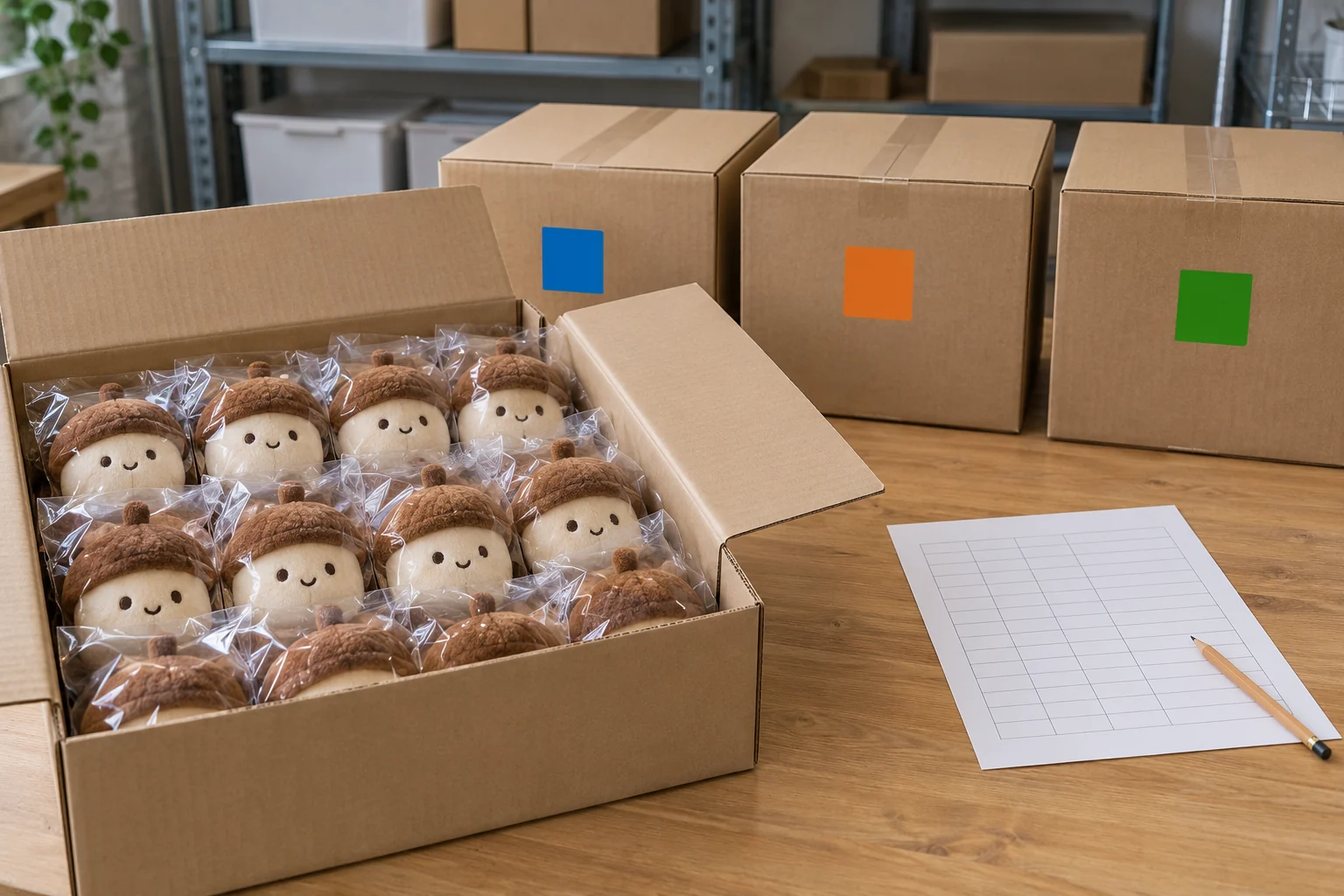
Test the complete retail presentation with the sample: plush, hang tag, barcode label and any bag or box. Check whether the tag covers the face, whether the toy fits without unwanted distortion and whether staff can identify it quickly. For gifts handed out immediately, discuss whether individual packaging is needed. Packaging choices still require protection, labeling and destination requirements to be considered. The packaging approval checklist covers the combined proof review.
6. Treat safety and launch timing as separate approval gates
State the intended age group, destination markets, materials, accessories and any functional components before the specification is finalized. The CPSC’s toy safety guidance describes U.S. testing, certification and tracking-label requirements. The applicable requirements depend on the actual product and market; a supplier’s general certificate or a soft appearance does not establish compliance for your design.
Assign responsibility for the product assessment, required testing, label wording and document review. Have the responsible compliance specialist or laboratory confirm the plan. Do not use “non-toxic,” “hypoallergenic” or “safe for all ages” as blanket product descriptions without the appropriate support. Sound, lights, batteries or other functional features require a separate feasibility and safety review rather than an informal addition to a standard plush brief.
Work backward from the date goods must be available at the park warehouse, not just the attraction’s opening day. Include sample review, internal approvals, production, inspection, freight, customs and receiving. Identify decisions still open and ask the supplier which dates depend on them. A requested arrival date becomes a commitment only when the actual scope and transport plan have been confirmed.
If only part of the stock is needed at launch, request a separately scoped first shipment and later balance. Compare the extra handling and freight implications before choosing that route. The split-shipment planning guide explains what to include in that discussion; it cannot guarantee expedited production or transit.
7. Keep a reorder file that another buyer can use
After approval, retain the specification, approved sample reference, packaging artwork, labels, color references and agreed inspection criteria under one version. Add the purchase order and the shipment’s batch or lot identifiers as they become available. Someone joining the team should be able to distinguish the current standard from an earlier proposal without reconstructing an email chain.
Record actual sales, event allocations, transfers, damage and stock remaining separately. These observations can support the next quantity decision, but they do not prove that the plush generated extra visits or higher park revenue. Before a repeat order, reconfirm materials, pricing, MOQ, lead time and whether any approved component has changed. An old order number alone is an incomplete production instruction.
A practical RFQ checklist for theme park plush
Send one brief with the following details, marking unknowns clearly:
- Park or business context, intended channels and target age group.
- Approved character references and who controls the merchandise rights.
- Dimensions, colors, accessories and quantity for every design or variant.
- Critical character features and the people responsible for approvals.
- Requested sample scope and any existing physical reference.
- Retail, prize or event packaging, tag and barcode needs.
- Warehouse destinations, proposed allocation and reserve-stock approach.
- Destination market, required documentation and compliance contact.
- Required warehouse arrival date, launch date and any phased-shipment request.
- Budget scope, including whether freight, packaging or other charges need separate quotations.
Contact Aokuma with your artwork and range sheet to discuss feasibility and a project-specific quotation. You do not need to invent answers for undecided details. A clear list of open decisions helps establish what must be checked before sampling and bulk production.
