
Custom stuffed toys can be a good promotional giveaway when your audience has a reason to want the character, the design connects clearly to your brand, and your budget covers development, delivery and distribution. They are less suitable when you need a very small quantity, an immediate delivery, or the lowest possible cost per handout. A plush toy can support a campaign; it cannot guarantee attention, loyalty or sales.
For a B2B buyer, the useful starting question is: who will receive it, where will it go, and what should happen after the handover? This guide turns those decisions into a practical brief for a custom plush manufacturer, without assuming that every attendee needs a different design or that an approved appearance sample authorizes production.
When does a plush giveaway fit your campaign?
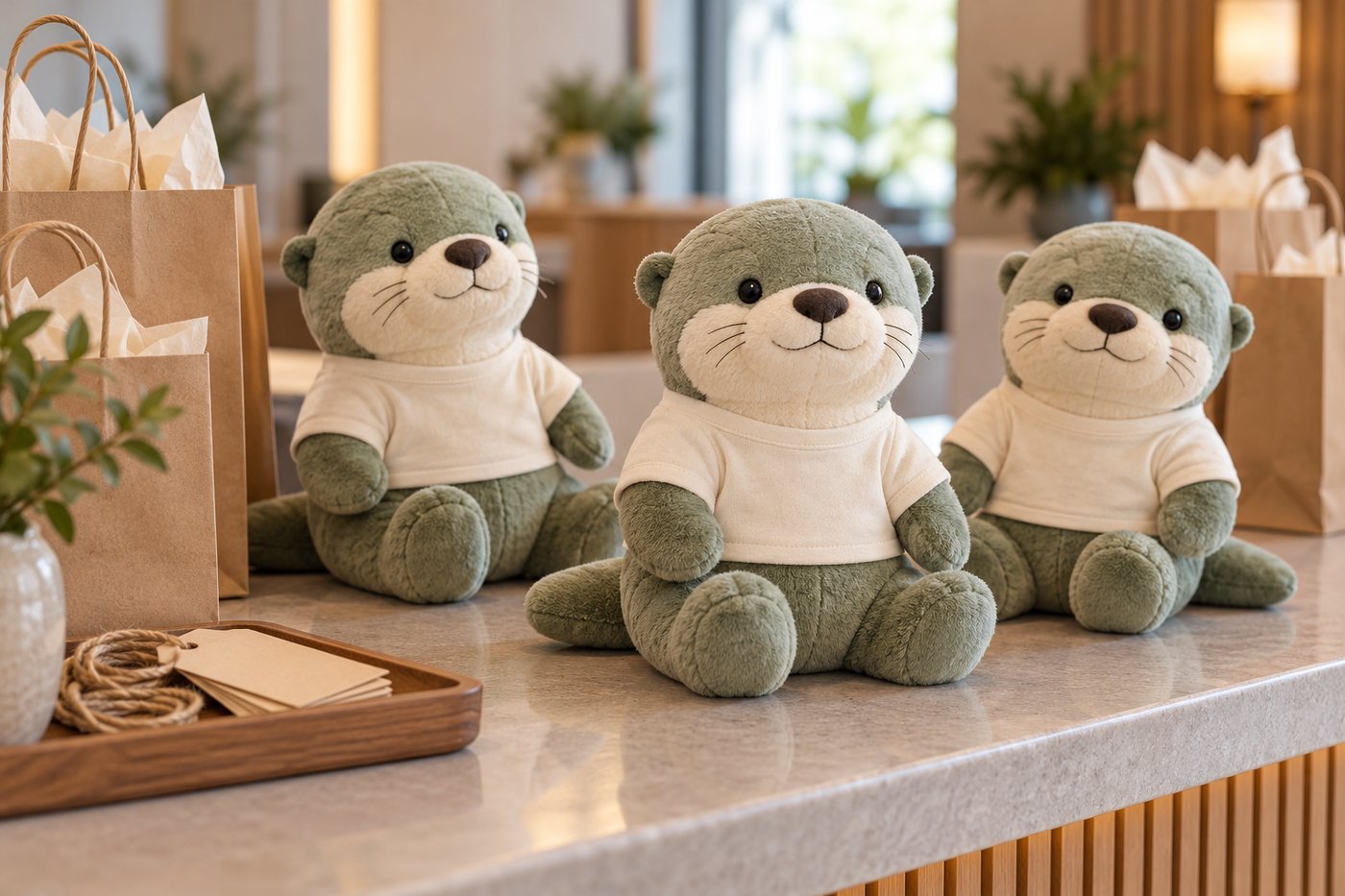
A character-led product is worth considering when people already recognize your mascot, when a physical keepsake connects to a specific occasion, or when the toy helps explain a brand story. A corporate mascot might suit employee welcome packs; a familiar animal might fit a visitor attraction; an original character could connect a product launch to an existing campaign.
Assess the fit before committing to custom development:
- Audience: Would the intended recipient choose to keep this item? Ask a small, relevant audience for feedback rather than assuming universal appeal.
- Brand connection: Can someone recognize the character or purpose without reading a long explanation?
- Practical use: Will it fit a travel bag, welcome box, reception counter or event handout station?
- Purchase scale: Is there enough confirmed demand for the minimum quantity of each design?
- Timing: Is there room for sample review, corrections, production, inspection and transport?
If several answers are unresolved, test the concept internally before ordering a prototype. An existing stock promotional product may be a better fit for a last-minute activity. Our corporate plush gift page covers the product route; this article focuses on deciding and briefing the campaign.

Write the campaign brief before the product specification
A supplier needs more than a logo and “something cute.” Explain the distribution setting so design and packing decisions have a purpose. A desk-sized mascot and a compact travel giveaway can use the same brand identity but need different dimensions, attachment choices and packaging.
Record these six decisions in a short internal brief:
- Objective: employee recognition, an event keepsake, visitor merchandise, a partner gift or another defined purpose.
- Recipients: who receives it, intended age group, and whether the giveaway may reach children.
- Distribution: handout, gift-box insert, retail collection, postal delivery or another route.
- Volume: confirmed quantities, optional quantities and the number of genuinely different designs.
- Destination and date: receiving locations and the date each location needs stock available, not just the public event date.
- Decision owners: who approves brand appearance, commercial terms, safety documentation and delivery.
Give one person responsibility for consolidating feedback. Conflicting comments from marketing, procurement and a local event team can otherwise produce a sample that satisfies no agreed brief. Mark uncertain fields as pending instead of letting the supplier turn them into assumptions.

Choose a recognizable design that can be approved
Start with the silhouette, expression and one or two distinctive brand features. Small lettering, long slogans and many tiny accessories may look clear in artwork but need review at the finished plush size. Ask the supplier to identify proposed simplifications before sampling and explain which features must remain unchanged.
Your product brief should include a front view, other available views, finished height with a measurement point, color references and logo artwork. Specify whether clothing is fixed or removable and where each brand mark belongs. The custom mascot plush guide provides context for character development; the materials guide helps describe fabric and filling choices.
Only supply artwork you have authority to use. A reference image can communicate a style preference, but it is not permission to reproduce another brand’s character. If an agency, illustrator or licensor must approve the adaptation, include that review in the schedule.

Build the quantity plan by design and destination
Aokuma’s standard minimum order quantity is 500 pieces per design. Do not treat a total across several characters as automatically meeting the minimum for every character. For example, 1,000 pieces split between four designs means 250 of each, not 1,000 of each. Ask how proposed size, color and clothing variations affect the quotation; do not assume they share one production minimum.
Separate the design quantity from the distribution allocation. One approved design sent to two offices does not necessarily require two different product designs. Write a simple allocation list that names the destination, required quantity, recipient contact, packaging format and required arrival date. Keep a distinct line for any approved reserve stock.
Illustrative planning example, not a customer case: a buyer planning 1,000 identical mascots might allocate 600 to an event warehouse, 350 to an office and 50 to reserve. The quantities reconcile to 1,000. Whether the reserve is packed with either shipment, stored elsewhere or handled later needs a separate agreement. This example does not establish freight, storage or split-delivery availability.
Do this reconciliation before requesting freight. It avoids quoting one destination and discovering later that cartons need to be divided, relabeled or shipped again. Use our MOQ explanation for variant planning and split-shipment guide when destinations or shipping methods differ.
Set a campaign budget, not only a unit-price target
Compare quotations against the same specification and delivery scope. A lower factory unit price can exclude work that another quotation includes. Keep a separate budget line for each material part of the project:
- Product development, sample work and sample courier charges.
- Bulk plush production and any separately quoted setup or decoration.
- Product-specific testing, documentation and inspection.
- Labels, hang tags, individual packaging and master cartons.
- Transport, import-related charges and final delivery, as applicable to the agreed terms.
- Receiving, storage, repacking and event distribution undertaken by your own team.
Identify which amounts are confirmed and which are provisional. Ask what input is needed to firm up each estimate. The design, approved sample, packing method and destination can affect the final scope. Rather than repeating generic price ranges, our custom plush quote checklist shows what to compare.
Plan for the actual recipient and market
Being a promotional giveaway does not remove product-safety responsibilities. In the United States, CPSC’s guidance for promotional-product buyers explains that artwork and intended audience can affect whether an item is a children’s product, and that responsibilities depend on the supply-chain arrangement. Do not rely on a corporate logo or an “adult gift” description alone to settle the classification.
Tell the supplier the intended market, age group, use and distribution setting before design approval. Ask the responsible importer and a suitable laboratory to confirm applicable requirements, the test sample needed and the documentation plan. CPSC’s toy-safety guidance emphasizes identifying the requirements applicable to the specific product. A report for a different item is not a substitute for checking your configuration.
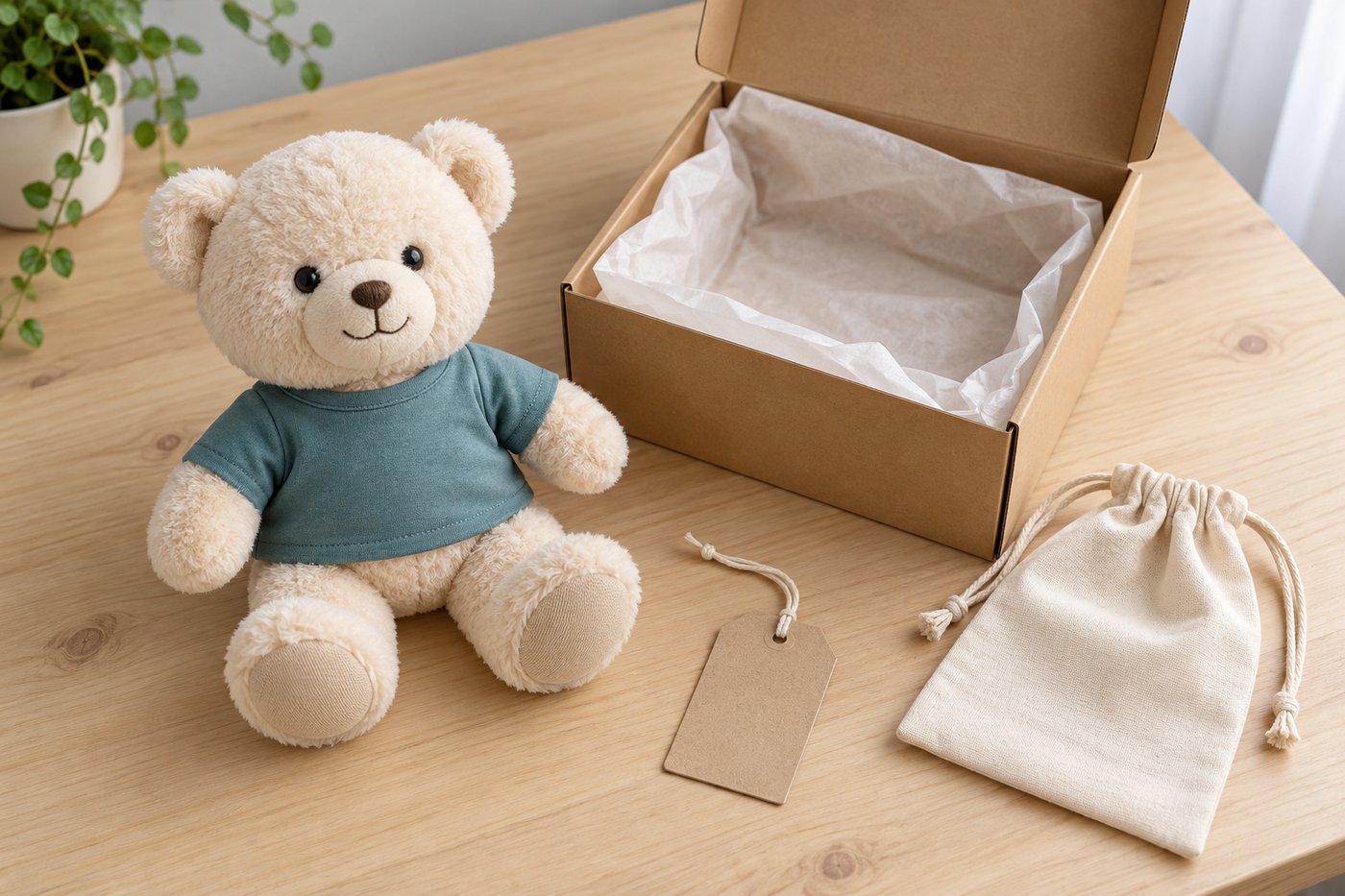
Include packaging and accessories in that review. A ribbon, detachable item, keyring or bag should not be added after the reviewed specification without checking its implications. For other markets, confirm the local requirements with the responsible parties. This planning checklist does not establish compliance for a proposed toy.

Approve the sample with a written handover
Aokuma’s indicative sample fee is USD 150–200 per design, subject to design review; complex designs are quoted separately. An initial sample typically takes 7–10 working days, subject to written confirmation. Confirm the starting conditions, included revision scope and courier charges in your project quotation; revisions, buyer review and shipping need their own time allowances. The sample fee is refundable when an order reaches 3,000 units of the same design, under the agreed quotation terms.
Review the sample against the brief, not against a memory of the concept. Record:
- Sample identifier, version and the views or physical sample reviewed.
- Size, proportions, face, colors, logo legibility and clothing.
- Agreed corrections with one annotated image and one clear instruction per issue.
- Packaging, label text and any items still awaiting approval.
- Who can approve each remaining decision and by when.
Appearance approval alone should not be treated as authorization to begin bulk production. Confirm the final specification, quantity, commercial terms and separate production release in writing. Use the sample approval guide for detailed review steps.
Prepare the event team as carefully as the factory
Packaging should match the handover. A fast event queue, a mailed gift and a premium welcome box have different needs. Ask who will remove transit packaging, assemble sets and dispose of waste. If different locations need different carton labels, provide the wording and allocation together so the receiving team can identify the stock.
Keep an agreed receiving checklist: count cartons, record visible damage, check the product and packaging against the approved reference, and separate items needing review. Agree the inspection and reporting procedure before delivery rather than inventing acceptance rules after stock arrives.
Tell the event team how the giveaway is allocated and what to do if demand exceeds supply. A short handover sheet can prevent accidental distribution of reserve stock. For the packing decision itself, see individual bags versus bulk packing; for seasonal deadline planning, use our seasonal plush guide.

Decide how you will judge the campaign
Define the result you want to observe before ordering. Useful operational measures include stock distributed, stock remaining, delivery exceptions and recipient feedback. If the campaign aims to generate sales inquiries, track those separately from how many toys were handed out. A popular giveaway is not automatically a qualified lead.
Use your own evidence before claiming an increase in loyalty, awareness or sales. The FTC’s advertising guidance calls for evidence-based claims. Avoid printing unsupported statements such as “safe for all ages,” “therapeutic” or broad environmental claims on a tag simply because they sound appealing. Have the responsible reviewer approve both product claims and campaign copy.
Send a quote request that a supplier can act on
Copy this outline into your inquiry and attach the artwork you are authorized to share:
- Campaign and recipients: purpose, intended age group, country or countries of distribution.
- Design: reference files, finished size, key brand features, logo placement and accessories.
- Quantity: pieces per design, proposed variants and any optional reorder quantity.
- Packaging: handout or gift-box use, labels and any assembly needs.
- Delivery: destination split, postal codes and required stock-in-hand dates.
- Budget: target and whether it includes testing, packaging, freight and import-related costs.
- Approvals: brand approver, procurement contact, required documents and open questions.
Send Aokuma your promotional plush brief for a project review. If a detail is not decided, label it as an option to evaluate. A clear brief makes it easier to identify feasibility questions and compare the quotation before committing to sampling or production.

